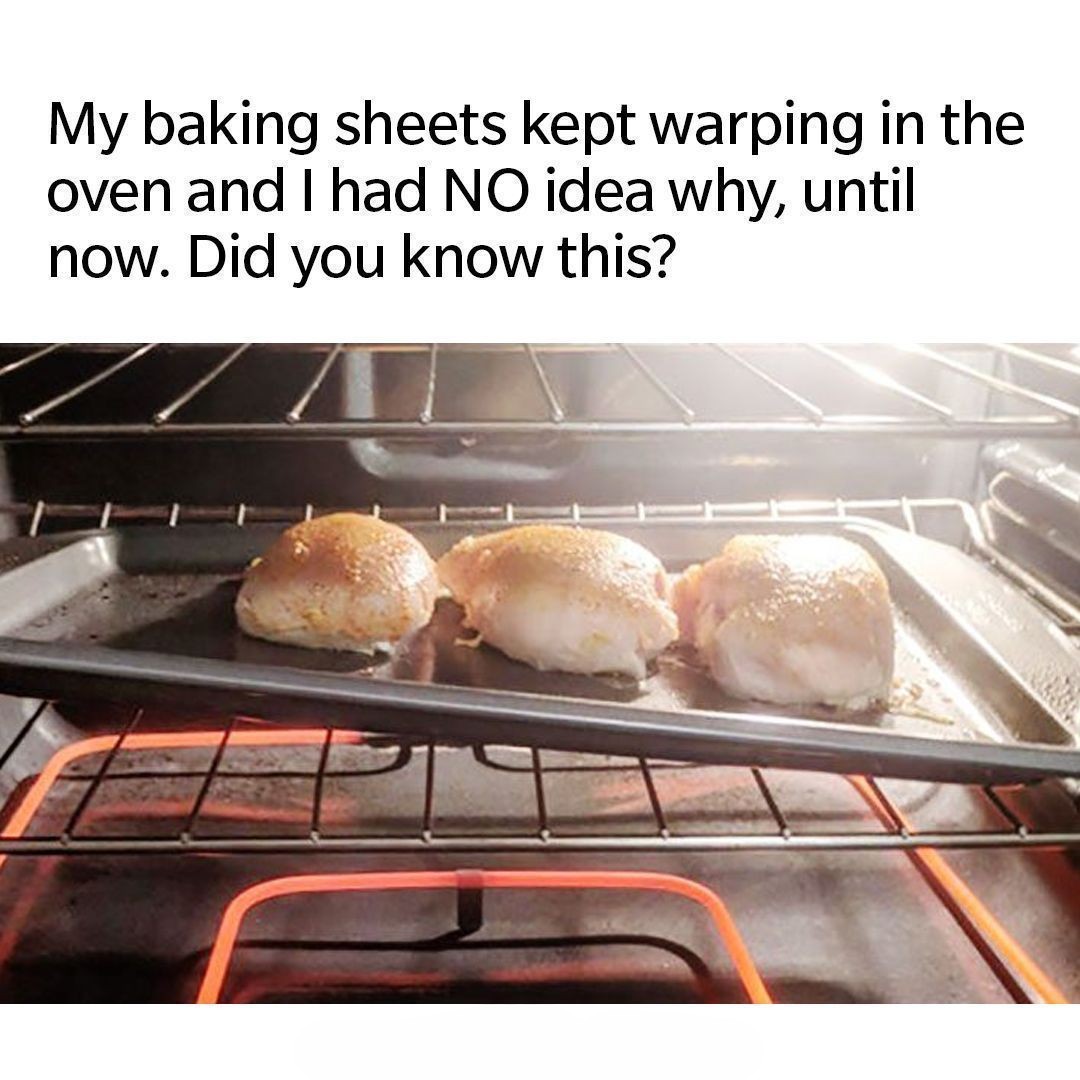
It’s always a good idea to invest in quality cookware, since we constantly expose it to high temps and messes. In general, stainless steel is considered to be a more heavy-duty metal than aluminum. It’s denser, more durable and less likely to bend under heat and weight. Look for cooking products that are multi-ply versus single-ply; they’re even more durable.
See what sheet pans our Test Kitchen recommends.
Thickness of Pan
Thicker pans also conduct heat better than thinner pans. Because they have less material, thin pans warp more easily when exposed to extreme temperatures. Thicker pans hold up better and generally do a better job absorbing heat.
Burner Size
If the stovetop is the culprit behind your warped pots and pans, it might be because your burner is too small for the cookware you’re using. Large pots can warp on the stove due to concentrated heat from the burner, which may only hit the center of your cookware’s base and neglect to heat the edges.
How to Fix a Warped Pan
Yes, there are steps you can take to fix the damage! Here are two simple methods to test in your kitchen.
Pound Flat with a Hammer
You’ll need two towels, some heat and a hammer to try and rejuvenate a warped pan. Start by heating the pan on low for several minutes, to get things warmed up. Then, carefully transport your pot or pan to a flat, durable surface like a concrete floor or workbench. Place a towel down between the pot or tray and the flat surface to act as a cushion, plus another towel directly on top of the warped metal. Then start pounding the metal flat with a hammer.
This method works best for cooking products that aren’t yet severely warped.
Use a Wood Block
For heavily warped cookware, try the wood block method. Follow the same steps as the towel and hammer method above (heat, place on a flat surface with a towel as a buffer), but place a wooden block on the metal and hammer that. You can hammer a little harder, and the wood will help distribute the blows to the metal.