To fix the problem, you have to understand why it’s happening. While aging plays a role, it’s not the whole story. Here are the primary factors that contribute to nocturia.
- Prostate Health (For Men): If you are a man over 50, your first step should be to get your prostate checked. An enlarged prostate can press on the bladder and urethra, causing frequent urination. This is a medical issue that your doctor can help you manage effectively.
- The Decline of a Key Hormone: Your body produces a hormone called antidiuretic hormone (ADH). Think of ADH as the night shift manager for your kidneys, telling them to slow down urine production so you can rest. As you age, your body naturally produces less ADH. This “manager” becomes less effective, and your kidneys continue producing urine at a daytime pace, filling your bladder while you’re trying to sleep.
- The Hidden Fluid Shift: This is a cause almost no one talks about. If you spend a lot of time on your feet during the day and notice that your ankles or lower legs swell, that fluid doesn’t just magically disappear. The moment you lie down, gravity’s effect ceases. All that accumulated fluid returns to your bloodstream, gets filtered by your kidneys, and goes straight to your bladder, triggering an urgent need to urinate a few hours after you go to bed.
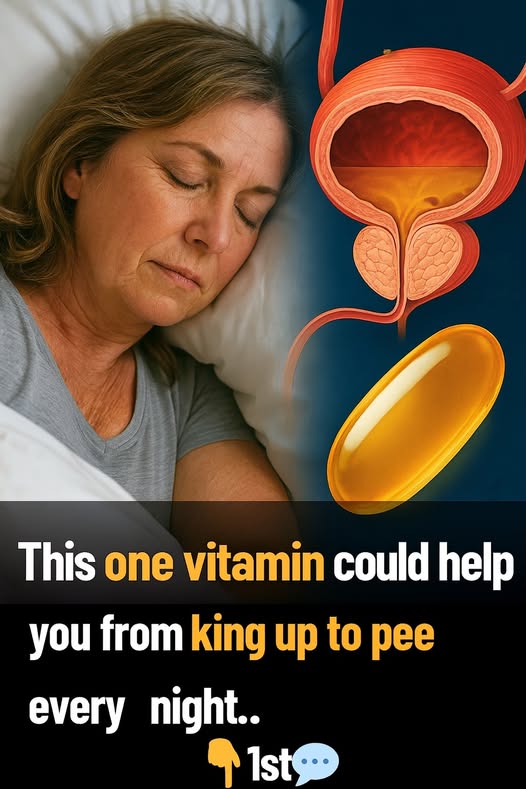
- The Surprising Role of Vitamin D: Your bladder isn’t just a passive storage bag. Its wall is made of a powerful muscle called the detrusor muscle. The cells of this muscle have a high number of Vitamin D receptors. Research shows that people with a Vitamin D deficiency experience more urinary symptoms, including urgency, leakage, and incomplete emptying. Correcting a Vitamin D deficiency is a fundamental step in strengthening your bladder and improving its function.
3. Debunking 3 Common Myths That Make Nocturia Worse
Before we get to the action plan, we need to clear up some common misconceptions that are likely making your problem worse.
- Myth #1: “To avoid peeing at night, I should drink as little water as possible.”
This is the most common and damaging mistake. By deliberately dehydrating yourself, you force your body into survival mode. It produces highly concentrated urine, which is extremely irritating to the lining of your bladder. This constant irritation makes your bladder hypersensitive, causing it to send false “go now!” signals even when it’s not full. Paradoxically, drinking too little during the day can condemn you to waking up more at night. - Myth #2: “I just have a small bladder.”
In the vast majority of nocturia cases, the problem isn’t the size of your bladder’s “storage tank.” The issue is the production rate of your kidneys at night and the return of fluid from your legs. You could have the largest bladder in the world, but if your kidneys are working overtime while you sleep, you’re still going to wake up. - Myth #3: “A glass of wine or beer at night helps me relax and sleep.”
This myth is particularly dangerous. Alcohol is a potent diuretic; it gives a direct order to your kidneys to produce urine as if there’s no tomorrow. Furthermore, alcohol actively blocks the release of your precious ADH, the hormone that’s supposed to be putting the brakes on urine production. So, you’re doing three things wrong at once: consuming liquid, taking a diuretic, and disabling the only natural brake your body has. Avoid alcohol completely, especially in the 3-4 hours before bedtime.
4. Your 3-Step Action Plan for Uninterrupted Sleep
Continue reading by clicking the ( NEXT 》 ) button below !