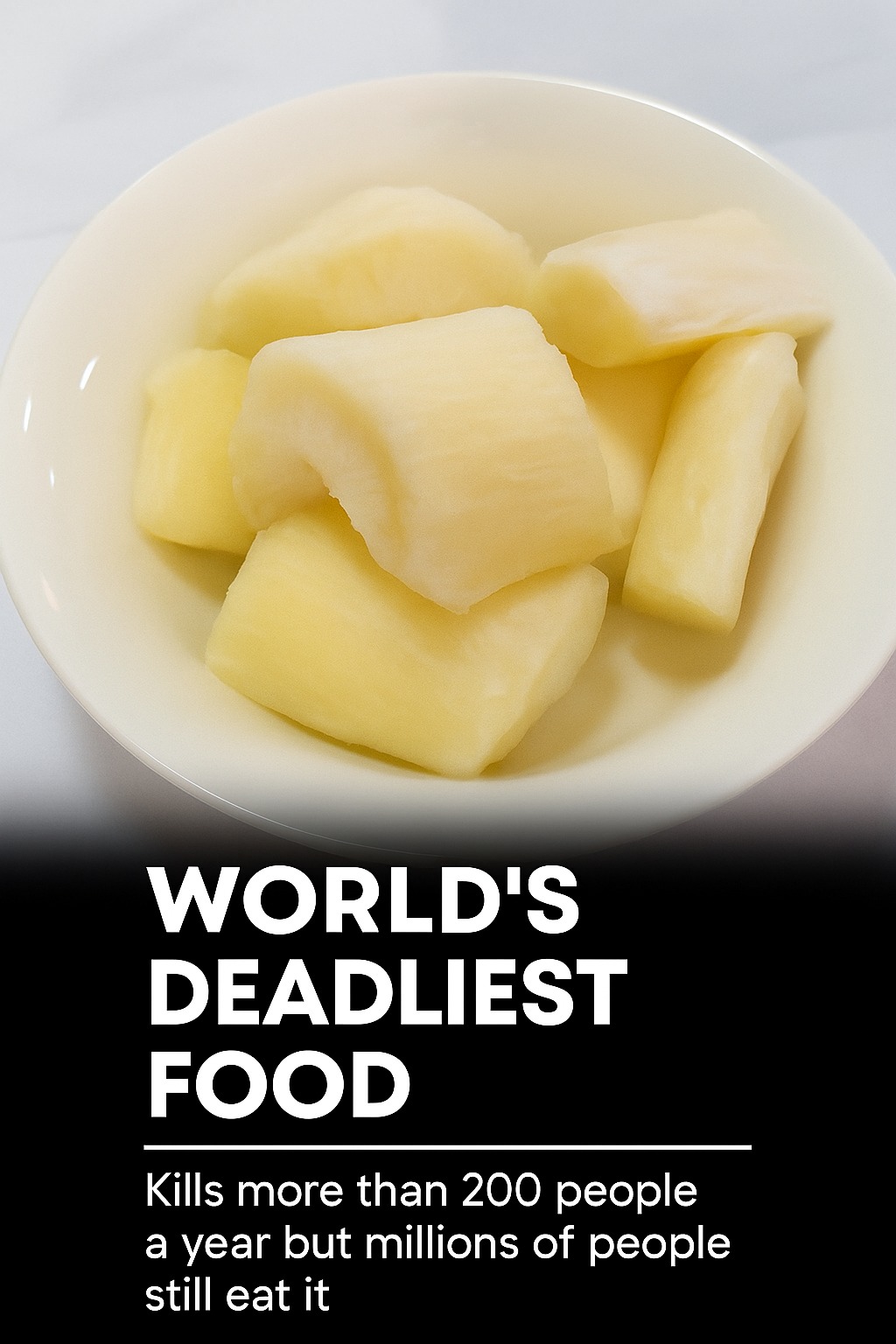
What is Cassava?
Cassava is a resilient, drought-resistant tuber, native to South America, prized for its high carbohydrate content, making it a critical calorie source in tropical regions. It is the base ingredient for many global staples, including tapioca pearls, garri, and fufu.
- Sweet Cassava: Contains naturally lower levels of toxins and is generally safer with basic cooking.
- Bitter Cassava: Contains dangerously high concentrations of cyanogenic glycosides.
The Core Danger: Cyanide
The danger is the presence of a compound called linamarin. When the cassava plant cells are damaged (through peeling, grating, or chewing), linamarin converts into a potent toxin: hydrogen cyanide.
According to the World Health Organization, cassava is responsible for more cases of food-related cyanide poisoning globally than any other crop.
Consequences of Cyanide Poisoning:
II. The Root Cause: Poverty and Survival
Continue reading by clicking the ( NEXT 》 ) button below !