Just Half a Glass Is Enough: The Effortless Salt Trick to Unclog Your Drains
We have all experienced that frustrating moment: standing over a kitchen sink or bathroom basin, watching the water swirl lazily—or worse, not move at all. Clogged drains are one of the most common and annoying household inconveniences. While many people immediately reach for heavy-duty, store-bought chemical cleaners, there is a simpler, safer, and significantly cheaper solution sitting right in your pantry.
If you are looking for a natural way to clear your pipes without resorting to toxic fumes or corrosive liquids, look no further. This salt-based method is not only budget-friendly—costing only a few cents—but it is also a powerhouse for regular plumbing maintenance. Here is everything you need to know about why salt is your plumbing’s best friend and how to use it effectively.
1. The Science of Salt: Why It Works
It might seem strange to pour a common seasoning down your drain to fix a plumbing issue, but salt possesses unique physical and chemical properties that make it ideal for this task.
-
Natural Abrasive: Coarse salt crystals act as a gentle scouring agent. As the salt moves through the pipes, it helps "scrub" the interior walls, loosening stubborn buildup like soap scum, hair, and organic debris.
-
Grease Dissolver: Salt has a natural ability to break down fats. In kitchen sinks, the primary cause of slow drains is often "FOG" (Fats, Oils, and Grease) that has solidified. Salt helps break the bond of these fats, making them easier to flush away.
-
Antiseptic and Deodorizing: Beyond just moving the clog, salt helps kill the bacteria that thrive in the damp environment of a drain. This eliminates the "swampy" smell that often wafts up from stagnant pipes.
It is important to note that while salt is a champion of maintenance and clearing partial blockages, it is most effective when used as a preventive measure or at the first sign of a slow drain.
2. What You Will Need
One of the best things about this remedy is its simplicity. You likely already have these items in your kitchen:
-
1/2 Glass of Salt: While table salt works, coarse sea salt or kosher salt is preferred because the larger crystals provide better abrasive action against the pipe walls.
-
A Kettle of Boiling Water: Hot water is the catalyst that melts the loosened grease and flushes the salt through the system.
3. Step-by-Step Instructions
To get the best results, follow these four simple steps:
-
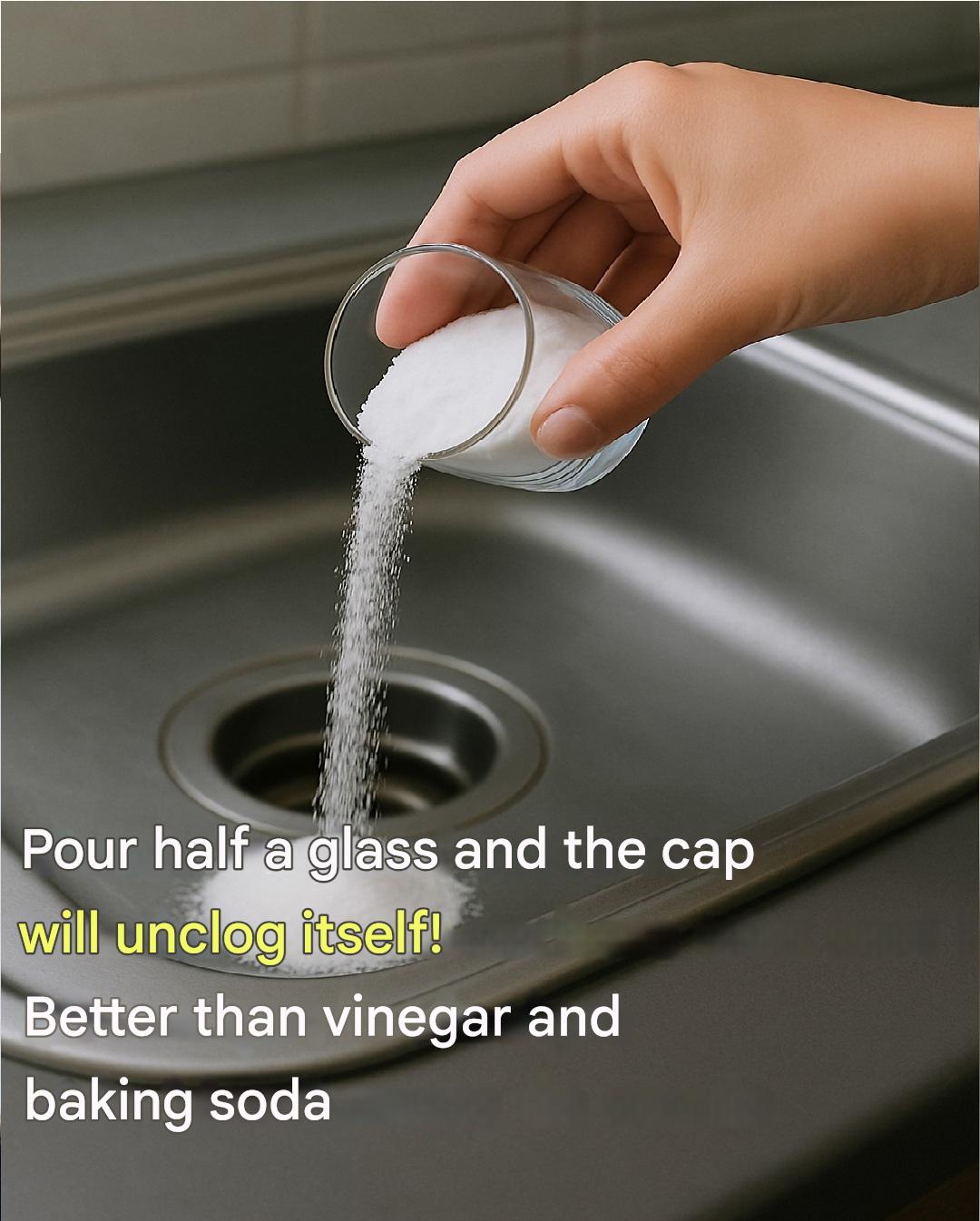
The Pour: Clear any standing water from the sink first. Pour exactly half a glass of salt directly into the drain opening. Ensure as much salt as possible goes down into the pipe rather than sitting on the grate.
-
The Wait: Let the salt sit undisturbed for 10 to 15 minutes. During this time, the salt is drawing moisture out of the organic matter and beginning to break down the greasy film holding the clog together.
-
The Flush: Carefully pour a full kettle of boiling water down the drain. The heat will melt the fats that the salt has weakened, while the rush of water carries the debris away.
-
Repeat: For older pipes or particularly slow drains, you may want to repeat this process two or three times to ensure the interior of the pipe is completely smooth.
4. The Power of Prevention: A Weekly Habit
The key to a stress-free home is preventing problems before they start. Rather than waiting for your sink to stop draining completely, make this "Salt Flush" a part of your weekly cleaning routine. Doing this once a week prevents the accumulation of hair and soap scum, ensuring your plumbing remains "free-flowing" and odorless all year round.
5. Dealing with Stubborn Clogs
Continue reading by clicking the ( NEXT 》 ) button below !