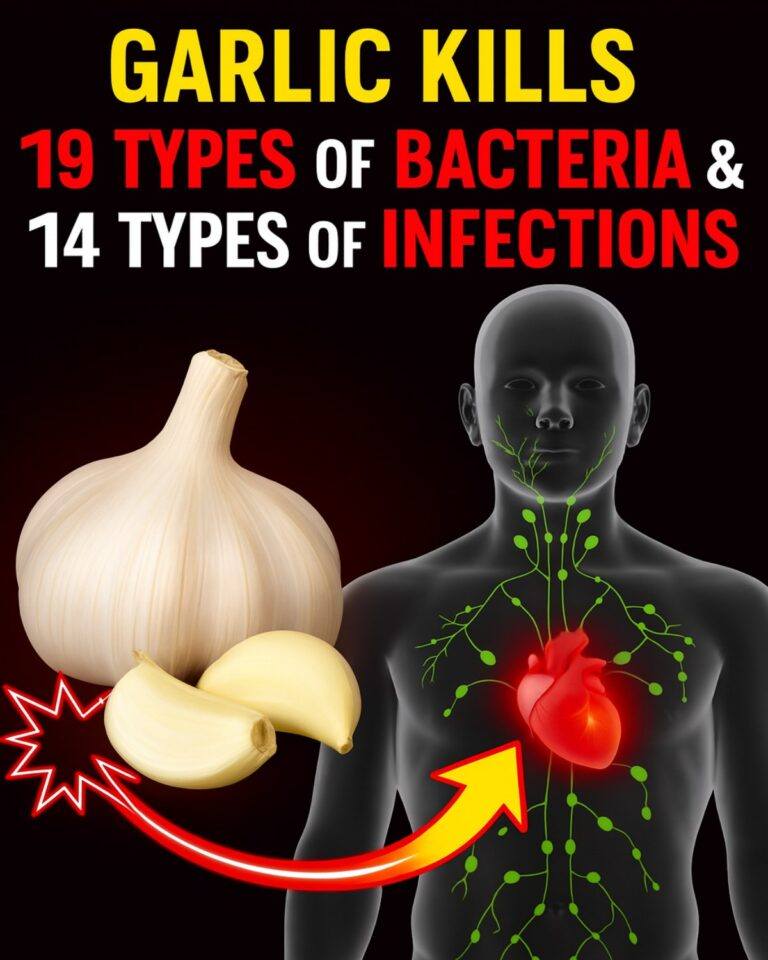
Garlic doesn’t only affect bacteria. Studies suggest garlic may also have limited activity against:
Fungal Infections
Garlic shows action against fungal organisms like:
-
Candida albicans
-
Skin-related fungal infections
These properties are linked to garlic’s ability to disrupt fungal cell membranes.
Viruses
Garlic may provide mild protection against:
-
Common cold viruses
-
Flu viruses
-
Some respiratory infections
Garlic may support immune activity by increasing natural killer cells — a form of immune defense important for fighting viruses.
However, garlic is not a cure for viral diseases and should never be used as a replacement for treatment.
What Garlic Actually Does in the Human Body
Garlic is not a medicine — it is a supportive food.
Here’s what garlic realistically does:
✅ Boosts immune response
✅ Offers mild antibacterial support
✅ Reduces inflammation
✅ Supports gut health
✅ Improves heart function
✅ Lowers blood pressure
✅ Improves cholesterol levels
What garlic does not do:
❌ Cure pneumonia
❌ Eliminate severe infections
❌ Replace antibiotics
❌ Kill viruses inside the body instantly
❌ Act like prescription medication
Garlic strengthens resistance — it does not function like a drug.
How to Use Garlic for Maximum Benefits
To activate allicin properly:
-
Crush garlic
-
Leave it exposed for 5–10 minutes
-
Then cook or eat it
This allows the enzyme reaction to complete before heat destroys the compound.
Best Ways to Consume Garlic
-
Fresh in salads
-
Mixed into dressings
-
Added near end of cooking
-
Raw in small amounts (if tolerated)
⚠️ Warning:
Too much raw garlic can cause:
-
Stomach irritation
-
Heartburn
-
Bad breath
-
Digestive discomfort
-
Blood thinning issues
People on blood-thinning medication should consult a doctor before consuming garlic in excess.
The Real Truth About Garlic and Infections
Continue reading by clicking the ( NEXT 》 ) button below !